How the Torvan driver app works without a signal
The driver’s tablet saves road events when it has no signal. Torvan’s rollout taught us where to store those events and how to settle a disagreement with dispatch.
A Torvan driver can lose mobile signal inside a steel warehouse, then lose it again at a border crossing. The company tablets also have roaming limits. The connection can disappear at the point where the driver needs to record a stop or capture a signed delivery document. If a driver has to wait for the server before doing that, the app has put a network dependency in the middle of the delivery.
We described how we dealt with that at Fabryka Tech Talks #30 on 4 June. The decision shaped the first driver prototype in December 2023. We built it in Kotlin for the rugged Android tablets Torvan supplies and manages. Having one set of company devices and one mobile platform halved the mobile work. We could spend that time on what would happen when a driver used the app through a stretch with no connection.
Save the action where it happened
The tablet saves every action in Room with its time and GPS position. WorkManager handles sending it when a connection returns. The time on the record describes when the driver acted. A later upload does not move the event to the moment the tablet came back online.
That distinction matters on a transport job. A dispatcher can look at a delivery after the vehicle has left the dock. The record still describes what happened at the dock, with the time and position the tablet recorded there. The same approach lets us handle electronic CMR documents where customers and countries accept them. Elsewhere, a driver can photograph the signed paper CMR. In both situations the tablet is the place to capture the evidence while it is at hand.
Give the office and the truck different jobs
Suppose an assignment changes at the office during a gap in coverage. The driver may still have the earlier assignment on the tablet. When the two assignments disagree, the office version wins. Dispatchers allocate the work and have the wider view of what the fleet is doing.
The rule for a road event goes the other way. If the truck recorded what happened on a delivery, that event takes precedence over what the office expected to happen. A later assignment can be valid at the same time as an earlier road event. Treating both as edits to be sorted by whichever timestamp is latest would hide that difference. We decided who had authority over each kind of record before deciding how to resolve a conflict.
The office owns the assignment. The truck owns the record of what happened on the road.
Test the whole action in the cab
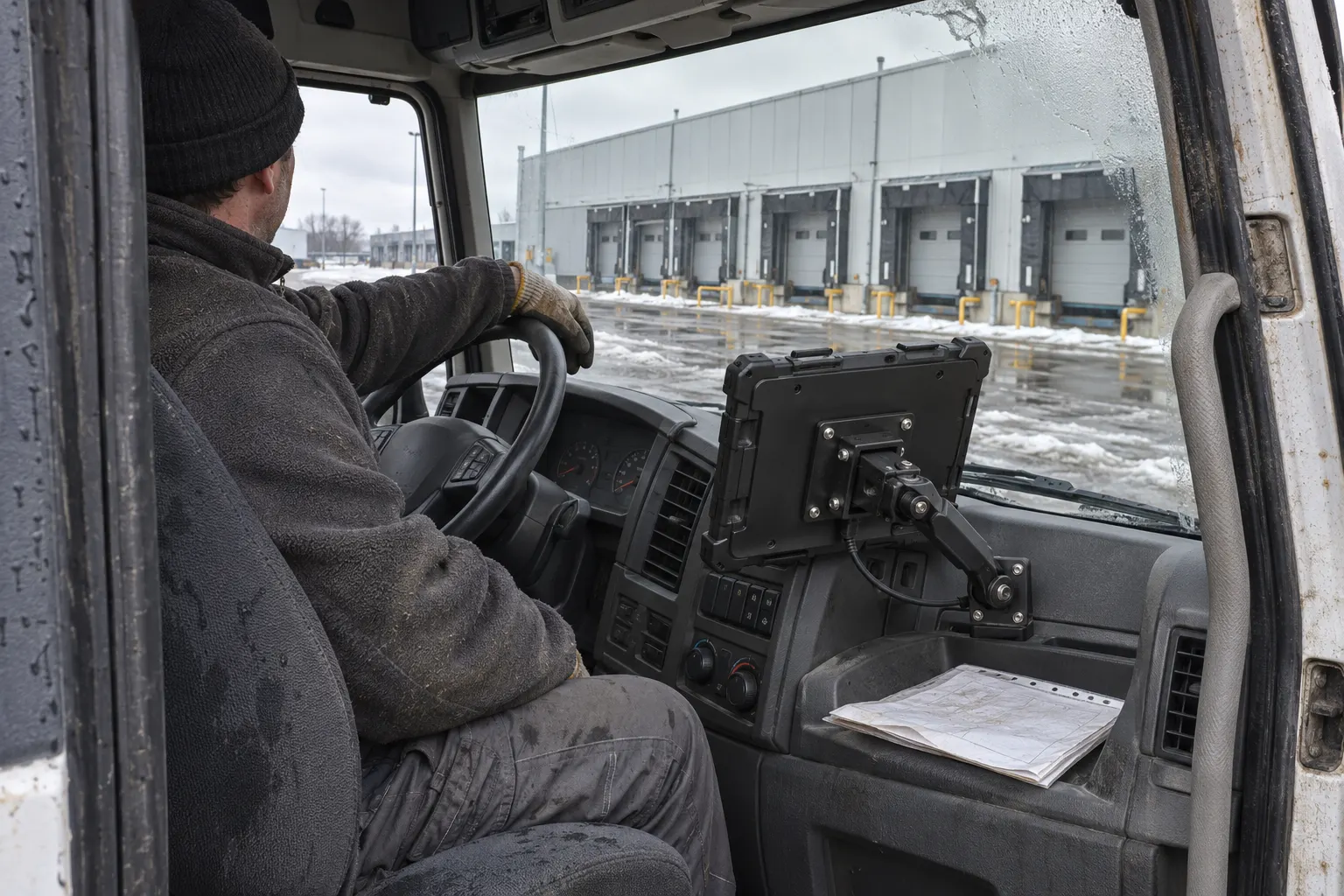
During the January 2024 field test at −8 °C, drivers wearing work gloves missed the prototype’s small controls and struggled with swipe gestures. We changed to buttons at least 15 mm high and a one-second hold to confirm. It was the same decision at a different level: a driver has to be able to record the action at the point it happens.
The pilot went onto 40 trucks in March 2024, then 300 in May. All 700 were on the new platform by 17 June. The office also had a new dispatcher board through that rollout. The Torvan case study covers how we introduced the board and connected the delivery documents to invoicing.