From 14 Excel files to one dispatcher board A planning platform for 24 dispatchers and an offline-first app in 700 trucks, redesigned after a week of riding in the cabs.
- Client
- Torvan
- Industry
- Logistics and transport
- Duration
- 12 months
- Team
- 9 people
- Scope
- Custom software, Mobile apps, Backend and integrations, UX/UI and product design, Cloud and DevOps
- Technology
- Java, Spring Boot, PostgreSQL, PostGIS, RabbitMQ, React, Kotlin, Room, Google OR-Tools, AWS, Kubernetes (Amazon EKS)
Situation
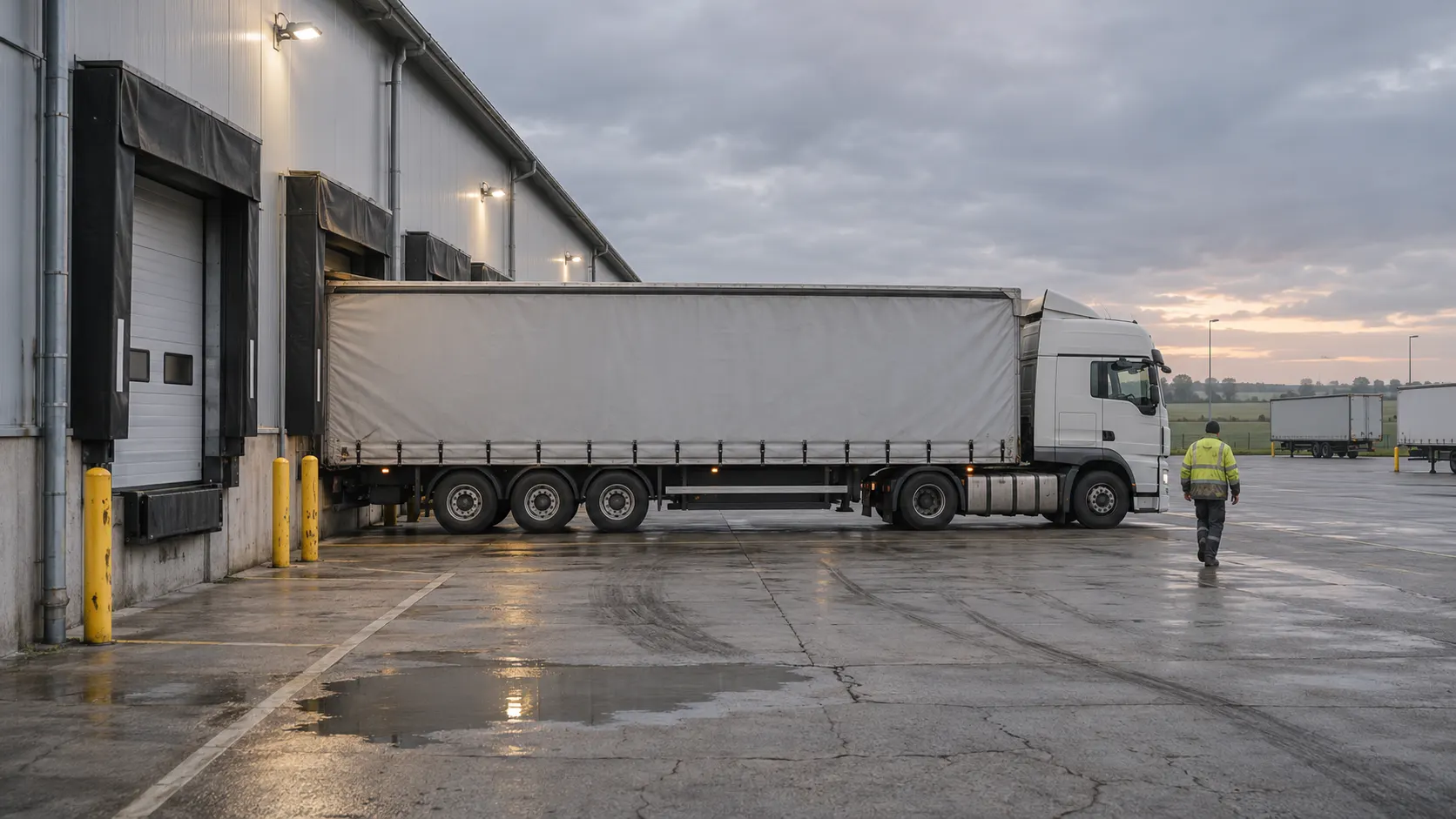
Torvan is a family-owned road carrier, founded in Łódź in 1994 with two trucks and run today by the second generation of the family. Since 2009 its head office and terminal have stood in gmina Stryków, next to the A1 and A2 interchange. It has 700 tractor units, about 760 trailers, about 950 drivers and 24 dispatchers on two shifts, and carries full truckloads in Poland, Germany, Czechia and the Benelux countries. Dispatchers planned trips in 14 Excel files with macros. Drivers reported their status by phone and text message. Paper CMR documents reached the office three days after unloading on average, because drivers brought them in at the end of a route, and so invoices went out five days late. Return loads were found by phone, and a large share of the kilometres was driven empty.
Challenge
Torvan wanted one system for the office and the road. Dispatchers needed a board for orders, trucks, trailers and drivers, fed by the telematics boxes the trucks already carried and able to suggest return loads, while every assignment stayed their decision. Drivers needed an app that tells them where to go and sends back what happened, signed delivery documents included. That app had to work without a signal: there is none inside steel warehouses, coverage breaks off at some border crossings, and the tablets have roaming limits. Many customers and some countries still work with paper CMRs, so e-CMR alone would not cover every trip. The documents then had to reach the ERP for invoicing. And 24 dispatchers and about 950 drivers had to move off Excel and phone calls while all 700 trucks kept running.
What we did
Three days at the terminal
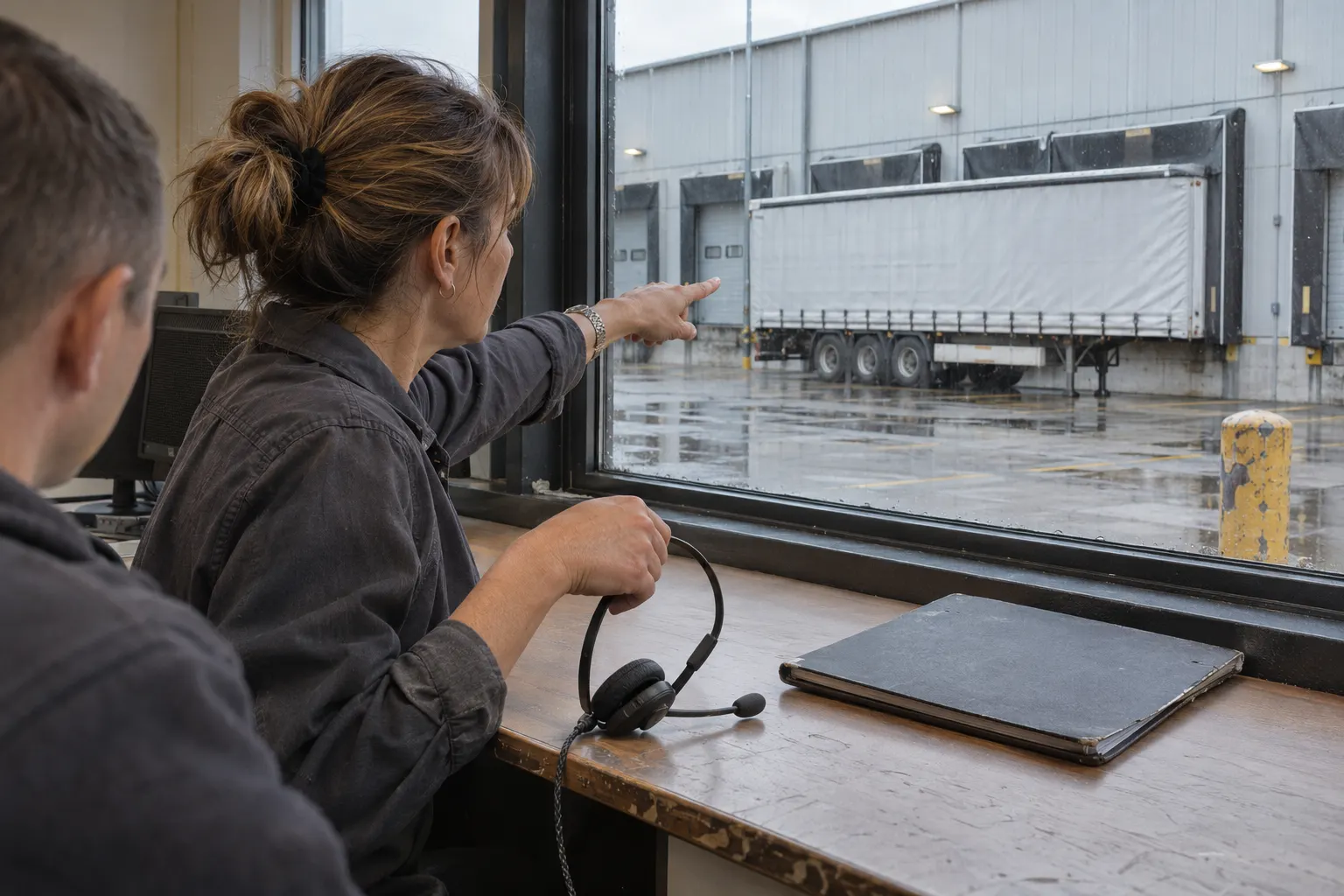
In September 2023 we spent three days with the dispatchers at the Stryków terminal, took the 14 Excel files apart and read the trip data from 2021 to 2023. In October we worked out the architecture and the API of the telematics boxes and set up central management for the tablets. The backend is Java 21 and Spring Boot with PostgreSQL and PostGIS, and telematics events arrive through RabbitMQ. By November the first dispatcher board in React worked: orders, trucks, trailers and drivers, with an order dragged onto a truck.
Offline-first from the first prototype
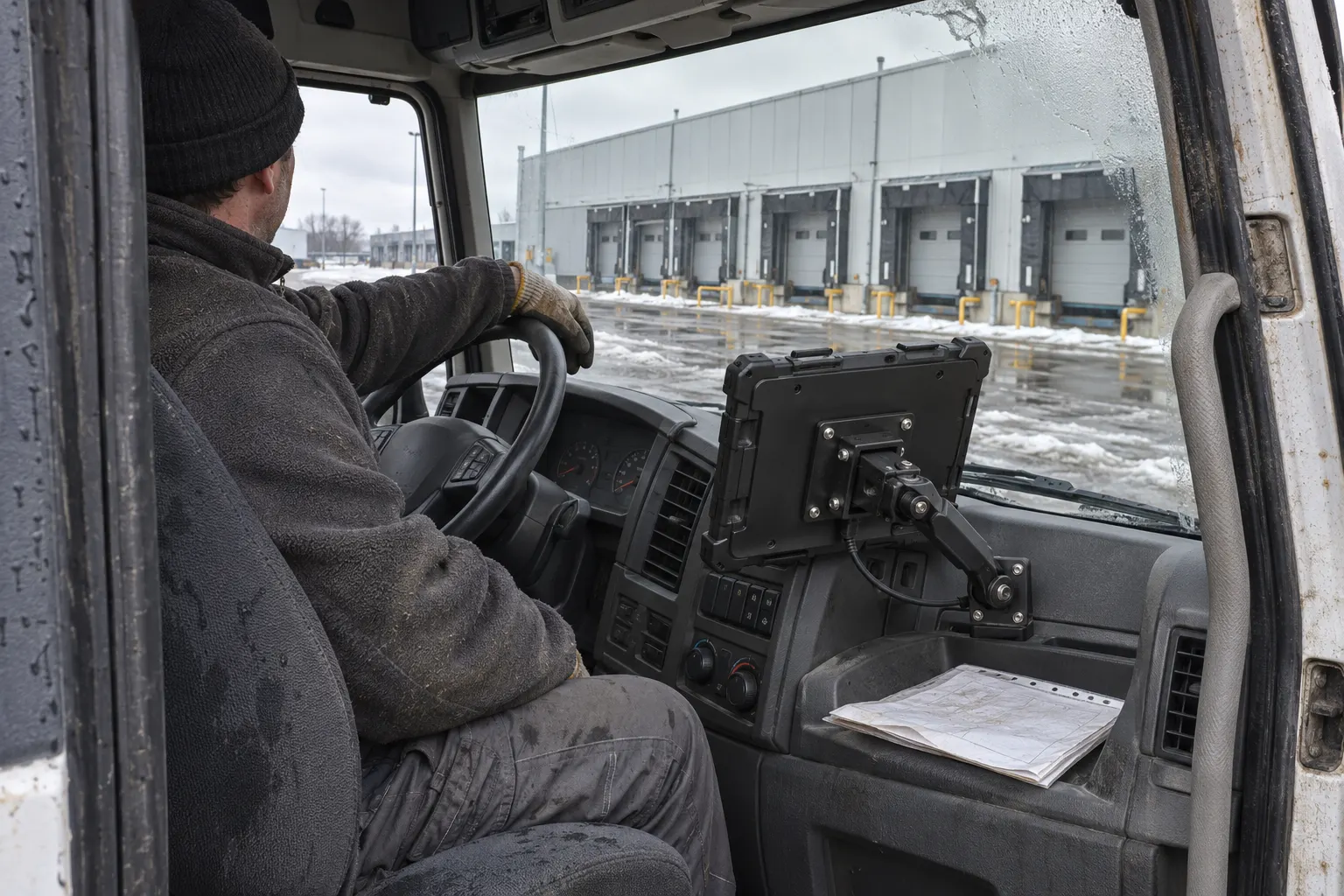
The driver app is native Kotlin on rugged Android company tablets, bought by Torvan and managed centrally; sticking to one platform halved the mobile work. It was offline-first from the December prototype. Every action is saved on the tablet in Room with the time and GPS position, and WorkManager sends it when a connection appears. In a conflict, assignments from the office win, and events from the truck win for what happened on the road. Our Cloud team built the Kubernetes cluster on Amazon EKS in AWS Frankfurt, and the backend developers ran it from then on.
Gloves at −8 °C
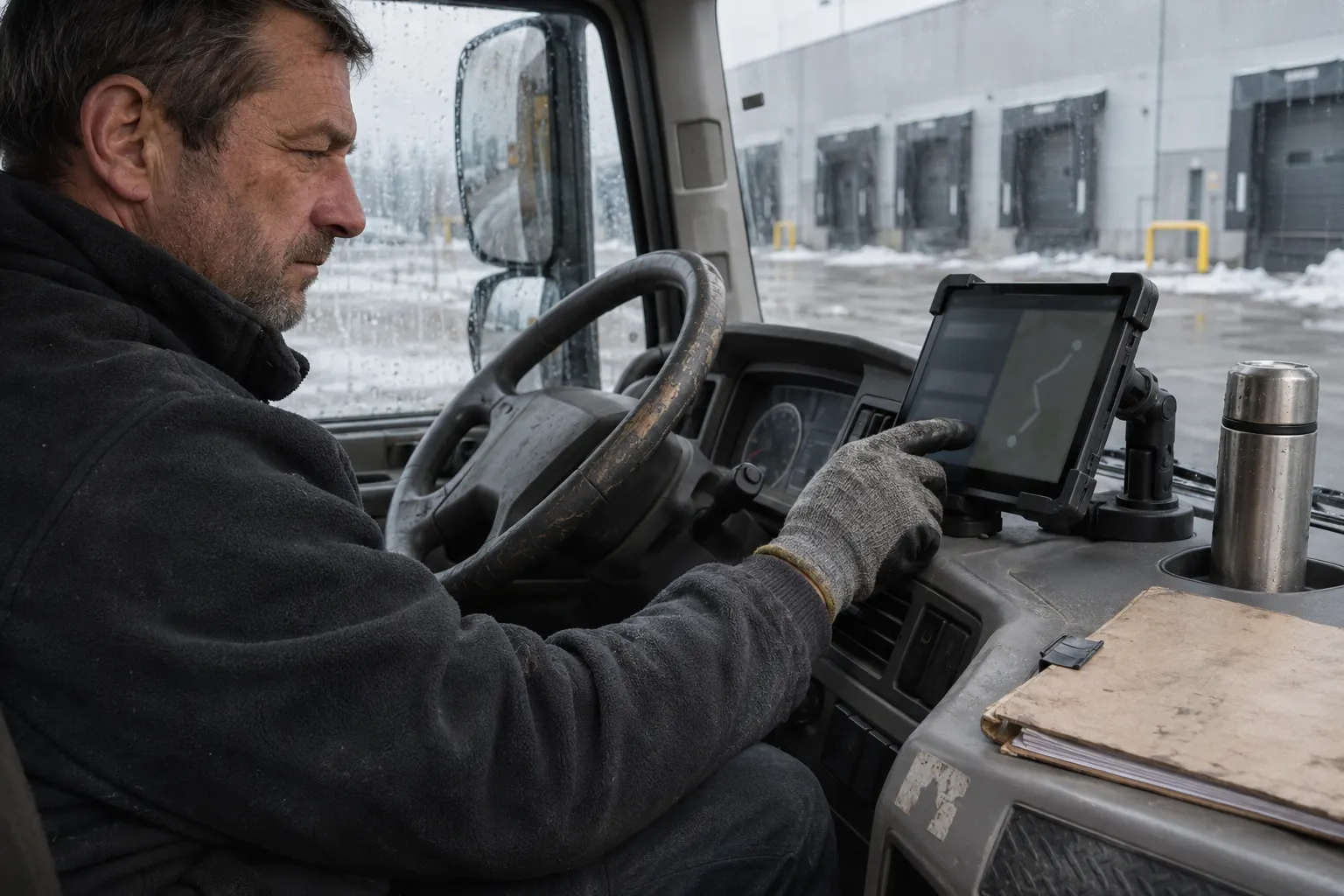
The prototype followed ordinary tablet guidelines: 48 dp buttons, a swipe to confirm a stop, small icons in a bottom bar. At the January field test it was −8 °C and the drivers kept their work gloves on. They missed buttons, confirmed the wrong stop on a bumpy access road and gave up on swiping. From 15 to 19 January our designer, an Android developer and the delivery manager rode in five cabs on Torvan routes, from Stryków to Poznań and Berlin, to Katowice and Ostrava, and to Gdańsk.
Rules written in the cabs
We rebuilt the app around what we saw. Each screen has one main action. Buttons are at least 15 mm high, there are no swipe gestures, and confirming means holding a button for one second. The layout is fixed in landscape for the cradle, with a high-contrast theme for low sun. The same five drivers tested every screen, gloves on, in a parked truck at the terminal. February also brought e-CMR, with a photo of the signed paper CMR where a customer or country still needs paper. The pilot on 40 trucks started in March instead of February.
Suggestions and all 700 trucks
In April the board began suggesting routes and return loads with Google OR-Tools (vehicle routing with time windows) and showing live positions and arrival estimates from telematics. Dispatchers accept or reject each suggestion, and their rejection reasons changed the rules twice in the first two months. In May 300 trucks used the system, and on 17 June all 700. Planning in Excel ended, with a read-only export kept for a month. In July we connected the ERP, so documents reach the office for invoicing on the day of unloading, and in August a maintenance team of two took over.
Results
- empty kilometres, Q4 2024 against Q4 2023
- −14%
- median from unloading to the documents in the office, instead of 3 days
- 3 h
- earlier invoicing on average in the second half of 2024
- 5 days
- of return-load suggestions accepted by dispatchers in September 2024
- 68%
In January the Harson team sent three people to ride in our cabs for a week, on our routes, and only then rebuilt the app. That is why our drivers use it, gloves and all.